
The 'rescue' operation occurred within kilometres of Iran's underground tunnel complex at Isfahan, assessed by the IAEA and US intelligence as holding a substantial portion of the country's 60 per cent enriched uranium stockpile. Retired senior US military officers have highlighted that the mission's footprint -- hundreds of special operators, multiple heavy-lift aircraft deep inside Iran -- appears outsized for recovering a single airman. Prem Panicker continues his must read blog on the Iran War.

Instead of trying to bulldoze through the stalled project, the establishment's energies could be more efficiently deployed in targeting other sectoral problems, says Devangshu Datta

'For the first time in a hundred years, the army has been taken out of the political equation. And for the first time ever, there is only one man who calls the shots. Not even Mao had this kind of power.'

By all available indications, the White House drafted a face-saving note and handed it, ready-made, to Islamabad. Pakistani Prime Minister Shehbaz Sharif was supposed to then post it in the guise of a plea urging Trump to extend the deadline by two weeks 'to allow diplomacy to run its course'. Trump would then graciously accept Pakistan's 'request' and declare a ceasefire. Sharif dutifully posted the message on X. Except that he, or whoever was handling the account, forgot to delete the tell-tale first line visible in the edit history: 'Draft - Pakistan's PM Message on X'. Prem Panicker's must read blog on the Iran War.

Chaffing under public ridicule in the US as well as internationally for having 'lost' the war, Trump is under immense pressure to do something, cautions Ambassador M K Bhadrakumar.

The clock on the ceasefire is running out. But everyone's already whispering about round two, possibly as soon as this weekend.

Pakistan and China are among the countries which are testing nuclear weapons, United States President Donald Trump has said to justify his administration's plans to resume testing of the US's own nuclear assets after a gap of over three decades.

US President Donald Trump claimed to have resolved the conflict between India and Pakistan, stating that 'seven brand new' planes were shot down during the conflict. He reiterated that he used trade as leverage to achieve this resolution.
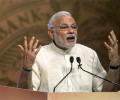
Modi has made nuclear power a key element of his clean energy strategy

'Torpedoes travel at more than 100 kilometres per hour, about 50-60 knots.' 'It must have been a matter of a few minutes before it detonated under the Iranian ship.' 'The Iranian ship would have probably got three, four minutes and wouldn't have known till they actually heard the whirr of the torpedo.'

...reopen for up to six months. Until then, the Strait stays nearly closed. The world pays. And no one, including the man who started this, can say when it ends, notes Prem Panicker in his must read blog on the Iran War.

As Iran heads into crucial peace talks with the United States of America, here are the six men who decide the Islamic Republic's course.

The question is no longer whether the war will expand. It has. The next few days will tell us whether the war stabilises around Hormuz or whether the Strait itself becomes the trigger for a far larger rupture. What to watch for over the next 48 hours is simple: Any move by the US toward direct naval control of the Strait; any credible Iranian attempt to disrupt or mine shipping lanes and, critically, whether energy infrastructure in the Gulf continues to be targeted.If those lines are crossed in tandem, the war will no longer be containable within the region.

Scientists at CERN have achieved a groundbreaking feat by successfully transporting antimatter across their Geneva laboratory, opening new avenues for antimatter research and potentially shedding light on the universe's matter-antimatter imbalance.

Iran's Ambassador to Pakistan, Reza Amiri Moghadam, has said there are no ongoing talks between Tehran and Washington, DC, countering United States President Donald Trump's claims of peace overtures.

The core issues to be settled -- access to Hormuz, Israel's aggression in Lebanon, the question of Iran's nuclear programme, sanctions relief and compensation -- are thorny enough to require weeks of patient negotiation. The most likely outcome of the opening sessions is that both sides take the measure of each other, establish what is and is not negotiable, and return home without having broken anything. That would count as progress.

'Our diplomacy should have been focused on preventing war and avoiding the inevitable disruptions it would cause, posing a real risk to India's growth story,' asserts former foreign secretary Shyam Saran.

There are enough people at the top decision-making level in Tehran who are still willing to negotiate, provided Trump can create the right setting for the negotiation to acquire a dynamic of its own, points out Ambassador M K Bhadrakumar.

The urgency for a resolution is underscored by the military situation, as joint operations by Israel and the US have consistently been "targeting Iran's missile systems, launch sites and other critical infrastructure" since the onset of the conflict.

Israel will continue its offensive in South Lebanon aimed at neutralising the threat from Hezbollah, which is backed by Iran.

US President Donald Trump's threats against Iran have drawn strong condemnation from Democrat leaders, who are calling for his removal from office, while some Republicans express concern.

Far from it; the country's resistance to the US, its nuclear ambitions, and its pursuit of influence and proxies across the Middle East are driven by a constant search for independence and security. Thus, Iran will never capitulate. Trump will learn this home truth ultimately, and it is going to be a humbling personal experience that may even destroy his presidency, predicts Ambassador M K Bhadrakumar.

Saudi Arabia and the UAE are actively pushing Trump to take the war to its bitter finish and 'erase' Iran's presence in the geopolitics of the region. Simply put, the two most powerful Sunni Arab oligarchies are on the same page as Israel. Such interference increases the risk of a breakdown in dialogue between the US and Iran, points out Ambassador M K Bhadrakumar.

Utilities in the power sector present an interesting investment case at this moment. Most power stocks have lost substantial ground in the past 12 months.

With the regulatory approval from the US Department of Energy in its kitty, Indian multinational conglomerate L&T is planning to focus on manufacturing small modular reactors (SMRs) to play a leading role in the commercialisation of nuclear energy in India.

'India's ties with Israel have to do with defence and general technology.' 'The war changes nothing in what India and Israel hope to get from the relationship.' 'It's not as though India will get significantly more benefits from Iran if India abandons Israel at this time.'

As he settled down to his job as army chief, General Qamar Javed Bajwa -- who died last week; his passing did not merit even an obituary in major print or electronic media in Pakistan! -- developed a vision of reducing his country's and his institution, the army's traditional hostility toward India, points out Rana Banerji, who headed the Pakistan desk at RA&W.

India and the US signed a historic agreement to cooperate in civil nuclear energy sector in October 2008.
'We need abundant affordable clean energy to help lift out of poverty the remaining part of humanity that is still living in poverty. I don't see any other viable candidate on the scene for doing that except advanced generation nuclear power,' says Dr James Hansen, a stout opponent of energy based on fossil fuels.

In his first major national address since hostilities began, Trump said the ongoing military campaign, dubbed 'Operation Epic Fury', has delivered 'swift, decisive, overwhelming victories'.

Karex, the Malaysian company that makes roughly one in five of the world's condoms -- about five billion a year, supplying Durex and Trojan among others -- announced this week that it is raising prices by up to 30 percent. The reason is the Strait of Hormuz.
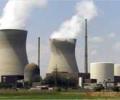
The huge reduction in the government's support for Bhavini has brought down the overall budgetary allocation for nuclear power schemes by 20 per cent.

The US Navy seized an Iranian-flagged cargo ship in the Gulf of Oman, escalating tensions as ceasefire talks face uncertainty. The incident raises concerns about the fragile ceasefire and the ongoing blockade of the Strait of Hormuz.

...is a way out, notes Prem Panicker in his must read blog on the Iran War. What the indefinite extension produces is a prolonged condition of not-war-not-peace, in which oil markets cannot stabilise, Asian refineries cannot plan, European governments cannot stop subsidising consumption they cannot afford, and the next flashpoint -- a seized tanker, a miscalculated drone strike, a Truth Social post that claims too much -- is one news cycle away.

The delegations from the US and Iran head to Islamabad on Friday, carrying a ceasefire that is already fraying, a Strait that is technically open and practically closed, and a negotiating agenda that would challenge even parties actually negotiating in good faith, which these groups are not. Prem Panicker continues his must read blog on the Iran War.

The major advantages of such plants are no need of land to build the reactors, earthquake resistant, abundance of water for active or passive cooling.

Trump also said that Prime Minister of Pakistan Shehbaz Sharif, who had visited the White House last year, credited him for saving millions of lives by stopping the conflict between the two nuclear-armed neighbours.
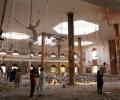
In 2025, India launched Operation Sindoor, a multi-domain combat mission against Pakistan in response to cross-border terrorism. The operation involved precision strikes, military retaliation, and diplomatic measures, marking a significant shift in India's security policy.

Israeli Prime Minister Benjamin Netanyahu has threatened to continue targeting Iranian leaders, claiming recent successes in eliminating key figures. He asserted that Israel, with US support, aims to undermine the Iranian regime and empower the Iranian people.

The Dhurandhar movies will undoubtedly shape the minds of the audience much more than news reports, court investigations, books and documentaries. But it is worth remembering that Pakistan's irridentist claims against India's national security have succeeded due to strategic planning, diplomacy, and the unsung heroines and heroes across government agencies, not due to a single maverick leader, points out Shweta Desai.But it is worth to remember that Pakistan's irredentist claims against India's national security have succeeded due to strategic planning, diplomacy, and the unsung heroines and heroes across government agencies -- not a single maverick, points out Shweta Desai.
